Learning has changed significantly with the rise of digital technology. Traditional Learning Management Systems (LMS) helped organizations store courses, manage learners, and track completion. Today, artificial intelligence is taking these capabilities further by making learning more personalized, automated, and data-driven.
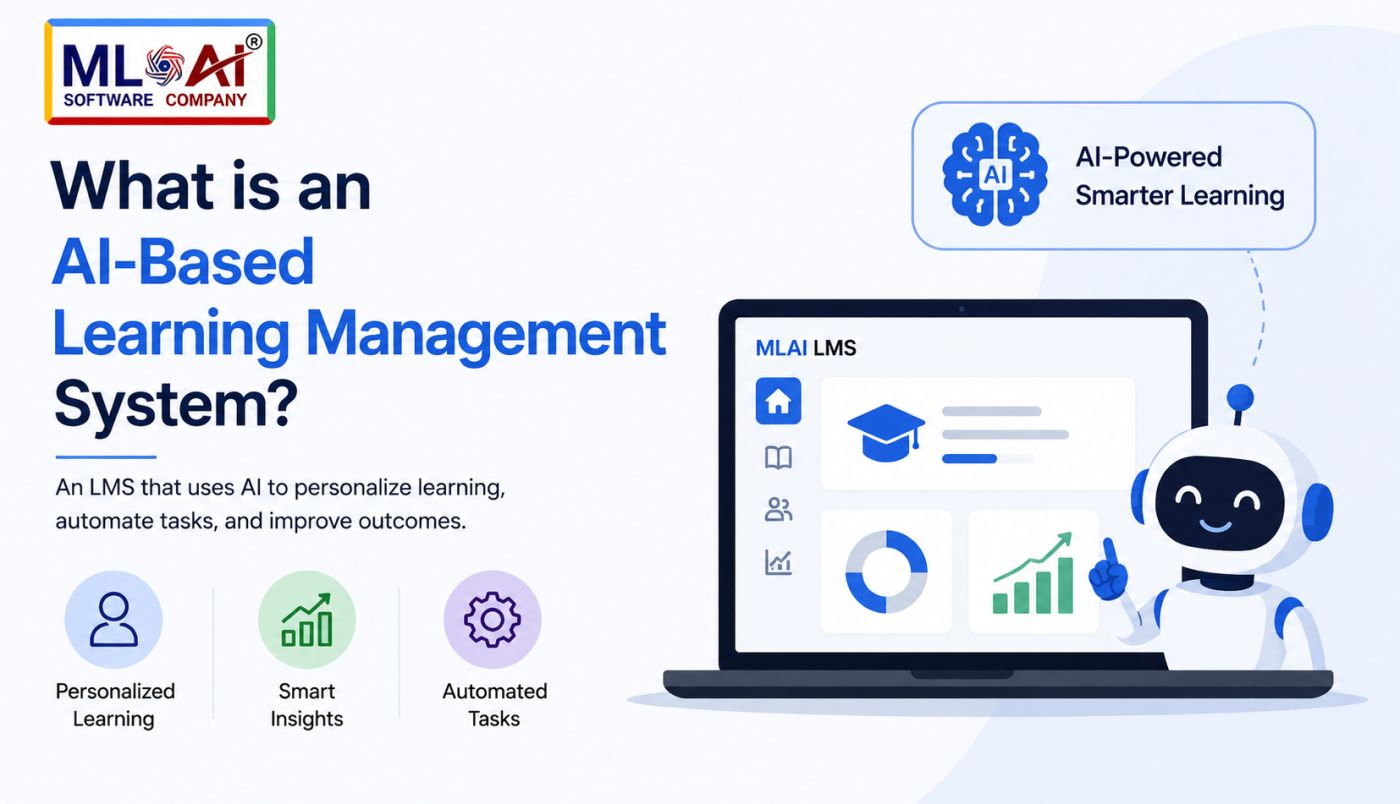
An AI-based learning management system combines standard LMS features with artificial intelligence to understand learner behavior, recommend relevant content, automate routine tasks, and provide insights that help improve learning outcomes.
What is an AI-Based Learning Management System?
An AI-based LMS is a learning platform that uses technologies such as machine learning, natural language processing, predictive analytics, and AI-powered automation to improve the learning experience.
Instead of offering the same learning path to everyone, an AI-enabled platform can analyze factors such as course activity, assessment results, learning pace, and engagement. It can then suggest relevant courses, identify learning gaps, and provide personalized recommendations.
For businesses and educational institutions, this means learning can become more targeted while administrators spend less time managing repetitive activities.
Also, Read more here - How to Choose the Right Learning Management Software?
How Does a Learning Management System with AI Work?
A learning management system with AI collects and analyzes learning data generated through everyday activities. For example, when an employee completes a course, takes an assessment, or struggles with a particular topic, the system can use that information to understand their learning needs.
AI can then support actions such as:
* Recommending courses based on individual learning goals
* Identifying knowledge gaps through assessment performance
* Creating personalized learning paths
* Providing AI-powered answers to common learner questions
* Predicting learners who may need additional support
* Automating reminders, notifications, and routine administrative work
* Generating learning reports and performance insights
The exact capabilities depend on the platform and the AI technologies integrated into it.
Also, Read more here - Learning Management System Use Cases for Education
Key Features of an AI-Based LMS
A modern AI-based learning management system can offer several intelligent features that make learning more efficient.
1. Personalized Learning: AI can analyze individual performance and recommend suitable courses or resources. Learners can focus on areas that are most relevant to their roles and development goals.
2. Intelligent Course Recommendations: Rather than manually searching through a large course library, learners can receive recommendations based on their interests, previous learning activities, skills, and performance.
3. AI-Powered Virtual Assistance: AI assistants or chatbots can answer frequently asked questions, guide learners through the platform, and help them find relevant learning resources.
4. Automated Assessments and Insights: AI can support assessment creation, analyze responses, and highlight areas where learners may require additional training. Human review can still be important, particularly for complex or subjective assessments.
5. Predictive Learning Analytics: AI can identify patterns in learner activity and help managers understand engagement, completion trends, and potential learning challenges.
Benefits of Using AI in Learning Management
The biggest advantage of AI is that it can make learning more responsive to individual needs.
For learners, personalized recommendations and easier access to information can create a smoother learning experience. For administrators, automation can reduce repetitive work and provide faster access to useful data.
Organizations can also use AI-driven insights to identify skill gaps and plan training programs more effectively. This can be particularly valuable for companies managing large or distributed teams.
However, AI should support—not replace—human expertise. Training managers, instructors, and subject-matter experts remain important for validating content, interpreting results, and making meaningful learning decisions.
Why Businesses are Adopting AI-Powered LMS Platforms
Businesses increasingly need continuous employee learning because skills, technologies, and workplace requirements change quickly. An AI-enabled LMS can help organizations deliver relevant training at scale while making learning data easier to understand.
For example, a company can use learner performance data to identify common skill gaps and create targeted training initiatives. Employees can receive recommendations relevant to their roles instead of navigating an overwhelming course library.
Platforms such as mlailms can help organizations explore how modern LMS capabilities can be combined with intelligent learning features to create more engaging and scalable training environments.
Also, Read more here - How Much Does a Learning Management System Cost in 2026?
What Should You Consider Before Choosing an AI-Based LMS?
AI should not be the only factor when evaluating an LMS. Organizations should also consider usability, security, integrations, reporting capabilities, mobile accessibility, scalability, content management, and administrative controls.
It is also important to understand how the platform handles learner data and whether organizations can maintain appropriate human oversight of AI-generated recommendations and insights.
The Future of AI in Learning
AI is likely to play an increasingly important role in corporate and institutional learning. Future LMS platforms may become better at understanding learner needs, adapting learning journeys, supporting skills development, and providing real-time insights.
The goal is not simply to add AI to an LMS. The real value comes from using AI thoughtfully to make learning more relevant, accessible, and measurable.
Conclusion
An AI-based learning management system brings intelligence and automation into digital learning. From personalized recommendations and AI assistance to predictive analytics and automated administration, it can help organizations create a more flexible learning environment.
For businesses looking to modernize employee training, choosing a reliable learning management system with AI can be an important step toward building a smarter, more personalized, and future-ready learning strategy.