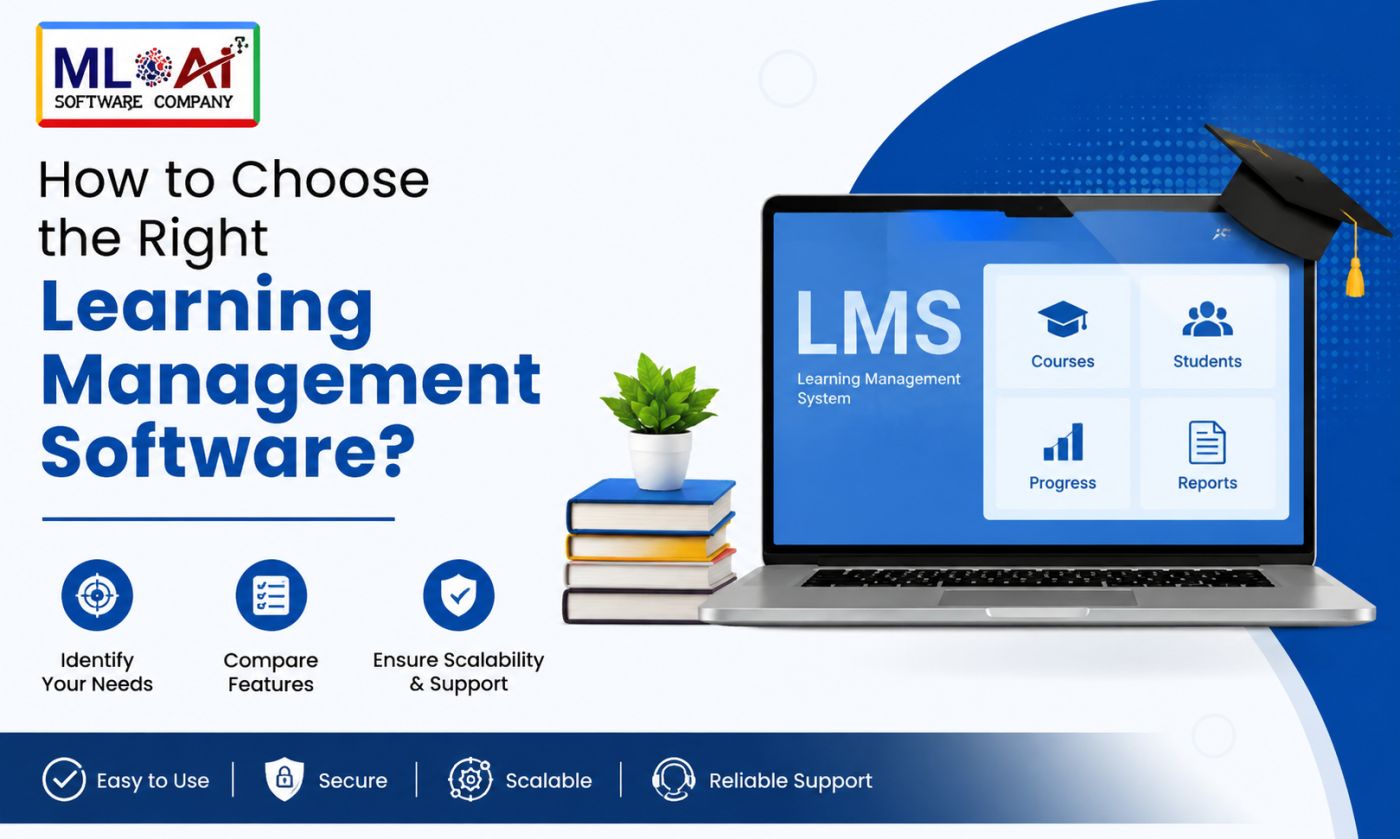
Choosing the right Learning Management Software is an important decision for schools, colleges, training institutes, and businesses. The right platform should make learning easier to deliver, manage, track, and improve—not simply provide a long list of features. A good selection starts by understanding your learning goals, users, budget, and future requirements.
What Should You Consider When Choosing an LMS?
1. Define Your Learning Goals
Start by asking what you want the platform to achieve. Do you need employee training, student learning, compliance programs, onboarding, skill development, or online courses? Your objectives will help determine which features are actually necessary.
For example, a corporate training program may need certifications, assessments, automated enrolment, and employee performance reports, while an educational institution may require assignments, grading, virtual classrooms, and student management.
2. Check the Essential Features
A reliable learning management system should support the complete learning journey. Look for features such as:
1. Course and content management
2. Online assessments and quizzes
3. Learner progress tracking
4. Certificates and completion records
5. Reports and analytics
6. User and role management
7. Mobile-friendly learning
8. Integration with existing business or education tools
Do not select software simply because it offers more features. Focus on capabilities that directly support your learning objectives.
3. Prioritize Ease of Use
An LMS should be simple for administrators, trainers, teachers, and learners. A complicated interface can reduce adoption and increase the time required for training.
Before making a decision, request a demo or trial. Allow actual users to navigate the platform, create a course, complete a lesson, generate a report, and perform everyday tasks. Testing the platform in real scenarios provides better insight than relying only on a vendor presentation.
4. Evaluate Scalability and Integration
Your requirements may grow over time. Therefore, select software that can support additional users, courses, departments, and learning programs without creating unnecessary complexity.
Also check whether it can integrate with tools such as HRMS, video-conferencing platforms, authentication systems, or other applications already used by your organization. Integration can reduce repetitive administrative work and create a smoother learning experience.
5. Compare Security, Support, and Pricing
Security should be a major consideration when learner information, assessment records, and organizational data are stored online. Ask vendors about data protection, access controls, backups, authentication, and compliance requirements.
Next, understand the complete pricing model. Check whether costs include implementation, support, upgrades, integrations, storage, or additional users.
Finally, evaluate customer support. Responsive technical assistance, training resources, documentation, and regular updates can make a significant difference after implementation.
Also, Read more here - Learning Management System Use Cases for Education
How Can You Make the Final Decision?
Create a shortlist of two or three platforms and compare them against the same criteria. Consider features, usability, scalability, integrations, security, support, and total cost of ownership.
If possible, run a small pilot before making a long-term commitment. A pilot helps identify usability problems and confirms whether the platform works with your actual courses and workflows.
Why Choose the Right Learning Management Software?
The right platform can centralize learning activities, improve learner engagement, simplify administration, and provide useful insights through reporting. Instead of choosing the most popular or feature-heavy option, organizations should select a solution that fits their specific goals.
For organizations looking for a practical platform, mlailms can be considered as part of the evaluation process. The key is to focus on learner needs, business objectives, ease of implementation, and long-term value.
Also, Read more here - How Much Does a Learning Management System Cost in 2026?
Frequently Asked Questions
Q1. What is the most important factor when choosing an LMS?
Ans. The most important factor is how well the platform matches your learning objectives and users.
Q2. Should I choose an LMS based only on price?
Ans. No. Consider features, usability, scalability, security, support, integrations, and total cost before deciding.
Q3. Should I test an LMS before purchasing?
Ans. Yes. A demo or pilot allows your team to evaluate the software using real learning scenarios.
Q4. Can an LMS support future growth?
Ans. Yes, provided you choose a scalable platform that can accommodate more learners, courses, integrations, and learning requirements.
Q5. What is the best way to choose Learning Management Software?
Ans. Define your goals, identify essential features, shortlist suitable platforms, test them with real users, compare total costs, and select the solution that provides the best long-term fit.