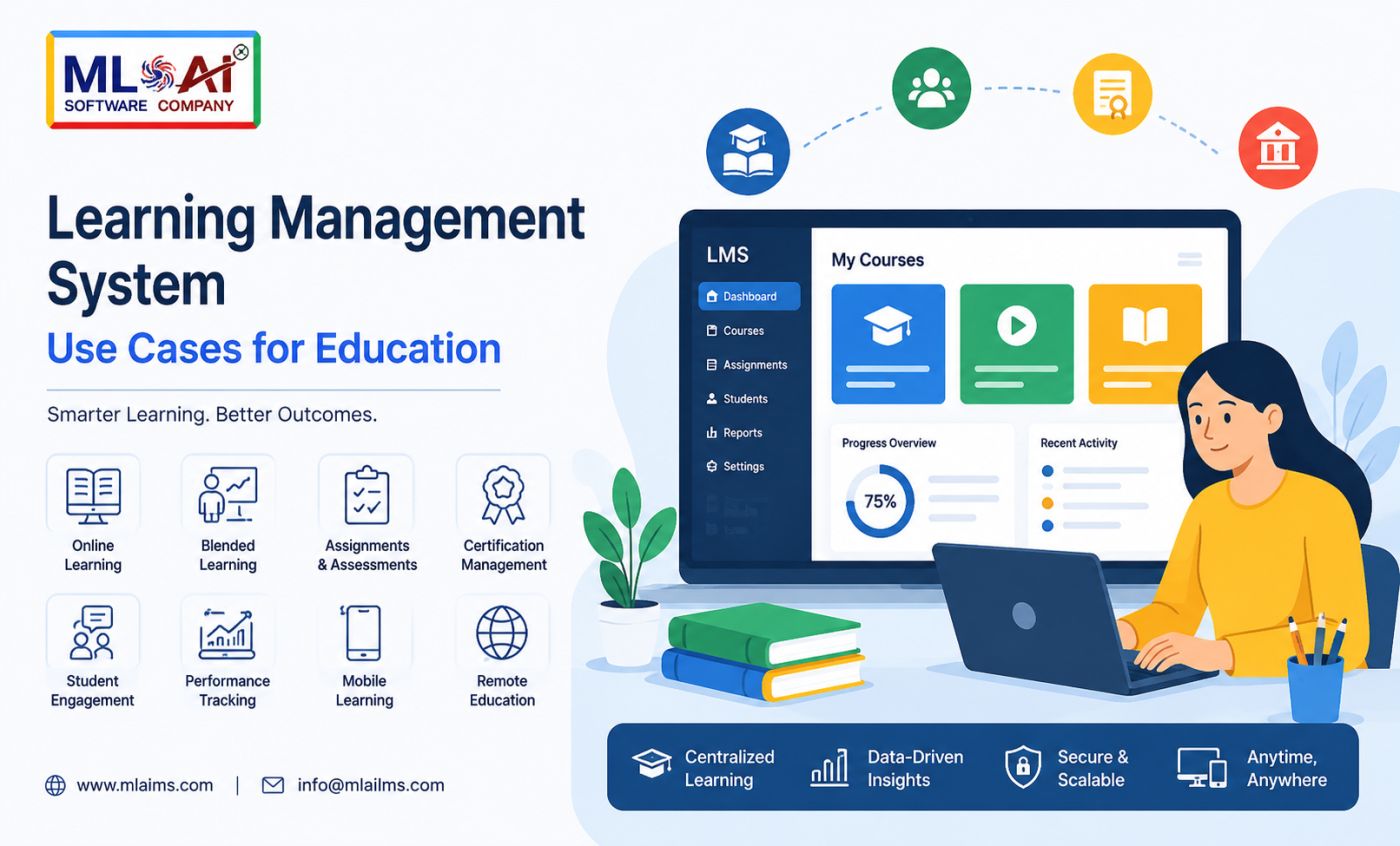
Education is changing quickly, and schools, colleges, universities, coaching institutes, and training centers are increasingly using digital tools to make learning more accessible and organized. A Learning Management System helps educational institutions manage courses, learning materials, assessments, communication, and student progress from one centralized platform.
With the right learning management system software, educators can reduce manual work while giving students a more flexible and engaging learning experience. But where can an LMS actually be used in education?
Also, Read more here - How Much Does a Learning Management System Cost in 2026?
Let’s Explore the Most Common Use Cases
1. Online Course Delivery
One of the most common uses of an LMS is delivering courses online. Teachers can upload videos, presentations, PDFs, assignments, and other learning resources so students can access them anytime.
This is particularly useful for colleges, universities, coaching centers, and online education providers in India where students may need flexible learning options.
2. Blended Learning
Many educational institutions now combine classroom teaching with online learning. An LMS supports this blended learning model by allowing teachers to share digital resources before or after classroom sessions.
Students can revise lessons, complete assignments, and access additional study materials from home, making learning more continuous.
3. Student Assessments and Online Exams
A Learning Management System can simplify quizzes, tests, assignments, and online examinations. Teachers can create assessments, define deadlines, and monitor submissions through one platform.
Automated grading for objective questions can also reduce teachers' administrative workload and provide students with faster feedback.
4. Tracking Student Performance
Understanding student progress is important for improving academic outcomes. LMS platforms can provide reports on course completion, assessment scores, attendance, activity, and overall learning progress.
Teachers and administrators can use these insights to identify students who may need additional support.
5. Homework and Assignment Management
Managing assignments through email, paper, or messaging applications can become difficult when there are many students. LMS software provides a structured environment where teachers can publish assignments, set deadlines, receive submissions, and provide feedback.
Students can also keep track of pending and completed tasks in one place.
6. Teacher-Student Communication
An LMS can bring learning-related communication into a centralized platform. Teachers can share announcements, course updates, instructions, and important notifications with students.
This reduces dependence on multiple communication channels and helps ensure that important academic information is easier to find.
7. Digital Learning Resources
Educational institutions can create a centralized digital library of learning resources. Students may access lecture notes, recorded classes, presentations, e-books, reference documents, and other materials according to their course requirements.
This makes it easier to organize educational content and provide consistent learning resources across classes.
8. Remote and Distance Learning
For institutions offering distance education, an LMS can become the foundation of the digital learning environment. Students can attend virtual classes, access study materials, complete assessments, and monitor their progress without being physically present on campus.
This can be especially valuable for students studying from different cities or regions across India.
9. Professional and Skill-Based Education
LMS platforms are not limited to traditional schools and universities. Coaching institutes, vocational training centers, professional academies, and skill-development organizations can use them to deliver structured learning programs.
Institutions can create courses based on specific skills, conduct assessments, and track learner completion.
10. Centralized Academic Management
One of the biggest advantages of using learning management system software is centralization. Instead of managing learning materials, assessments, student records, and communication across different tools, institutions can bring these activities together.
MLAILMS provides an LMS-based approach that can help educational organizations create a more organized and digitally connected learning environment.
Also, Read more here - What is a Learning Management System? A Complete Guide for Modern Businesses
Why is an LMS Important for Education?
The value of an LMS goes beyond simply putting courses online. It can help institutions improve accessibility, organize educational content, simplify administration, and understand learner progress.
For teachers, it can reduce repetitive administrative tasks. For students, it provides convenient access to learning resources. For administrators, centralized reporting can make it easier to monitor academic activities.
Frequently Asked Questions
Q1. What is a Learning Management System in education?
Ans- A Learning Management System is a digital platform used by educational institutions to manage courses, learning content, assessments, communication, and student progress.
Q2. Who can use an LMS?
Ans- Schools, colleges, universities, coaching institutes, vocational training centers, and online education providers can use an LMS.
Q3. How does LMS software help teachers?
Ans- It can help teachers organize course content, manage assignments, conduct assessments, communicate with students, and track learning progress.
Q4. Can an LMS support online and classroom learning?
Ans- Yes. An LMS can support fully online education as well as blended learning, where digital resources complement classroom teaching.
Q5. Is an LMS useful for Indian educational institutions?
Ans- Yes. A well-designed LMS can help Indian institutions provide flexible learning, centralized academic resources, online assessments, and digital access for students across different locations.
Conclusion
The use cases of a Learning Management System in education extend from online course delivery and assessments to student performance tracking, digital resources, communication, and remote learning. As educational institutions continue adopting digital learning practices, LMS platforms can play an important role in creating a more structured and accessible learning experience.
For institutions looking to move beyond traditional learning management methods, solutions such as MLAILMS can provide a centralized foundation for managing modern digital education.